Mornings in winter may be challenging for drivers and their cars. You put in the key, and your engine does not start like it is supposed to. It is just one of the most frequent headaches of a car owner in the cold season, and it usually leads to only one thing: the battery that does not cope with cold weather.
The battery of cars is aimed at instant delivery of power; however, once the weather becomes colder than freezing, all aspects of the chemical reactions within the battery, as well as the density of engine oil, alter. Knowing the impacts of cold weather on battery performance will enable you to avoid those maddening mornings with no start and have your car running even during the winter.
Why Your Car Battery Struggles in Freezing Temperatures
Cold weather gives a real test to the electrical system of your car. When your temperature is lower the less energy your battery can provide to your engine. This is because batteries are dependent on chemical reactions in order to produce electricity and the reactions are very slow at low temperatures.
The older type of batteries is especially susceptible. In the course of time, internal parts are eroded, and the electrolyte within is weaker. When it becomes winter the first batteries to die are usually the old or those that are in poor shape. Early indicators such as dim headlights, slow engine turnover or dashboard warning lights will help you to avoid being stuck on a freezing morning.
What Happens Inside a Battery During Cold Weather
To realize the reasons why cold weather will impact your battery, it is good to know how a car battery functions. Each lead-acid battery contains lead and lead dioxide plates submerged in the electrolyte solution (water and sulfuric acid mixture). As you turn on your automobile, a chemical interaction of these substances generates an electric current.
It is also the reason why cold cranking amps (CCA) are important during the winter season. CCA is used to determine the amount of current that a battery could provide within 30 seconds without decreasing below a certain voltage. The better the CCA rating the better your battery will operate in cold. Whenever selecting a replacement battery to be used during winter conditions, be sure that the battery is of the recommended CCA level for your vehicle.
How Cold Weather Affects Battery Performance
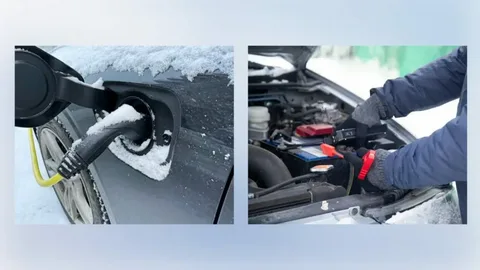
When you turn on your car in the morning when it is cold, a number of things occur simultaneously. The oil in your engine viscosifies, making the starter motor work harder. Electrical power is also needed by the fuel system and ignition system in order to work. It is actually very unfortunate that during this very moment, it is the weakest your battery can be due to the temperature.
This is the combination that leads to low-temperature engine start problems, higher demand and lower power output. You may crank slowly, or not at all. You can hear a clicking sound and it indicates that the starter motor is not receiving power to turn on the engine.
Winter Battery Problems and How to Prevent Them
In winter, the first thing to remember is to ensure you check your battery charge prior to the drop in temperature. There are probably numerous auto shops that can test their batteries free of charge to see whether it will be strong enough to brave cold weather. Your battery is over three years old, and it is clever to test it on the spot twice a year, once before winter and once before summer.
Clean and dry off battery terminals. During the cold weather, moisture and corrosion is increased, resulting in poor electrical connections. A combination of baking soda and water with a small wire brush can be used to clean corrosion.
It is also good to park your car in a garage or a nice place. To eliminate trouble with batteries in winter, it is good to keep your battery warm to increase battery life. And the fact is, in case you do not have a garage, you can use an insulating battery blanket or heater.
Cold Cranking Amps (CCA) and Why They Matter
Cold cranking amps (CCA) refer to the ability of your battery to jump-start your car when it is cold outside. Without sufficient CCA in your battery, you may not be able to start your car during winter, although it will be fully charged.
A mechanic can also be asked to carry out a CCA test before the onset of winter. This test is used to determine the extent of power that your battery is able to provide at low temperatures and it provides information on whether the battery is powerful enough to start during cold conditions.
Tips for Winter Car Battery Care
You do not need to make a complicated deal when taking care of your car battery in winter. Several simple routines can count:
- Drive longer distances. Even short journeys do not give the alternator time to ensure that the battery is fully charged.
- Keep your battery warm. Insulate, keep in a garage, or put on a battery blanket.
- Switch off electronics before commencement. This helps in lessening the strain of your battery in case it gets cold.
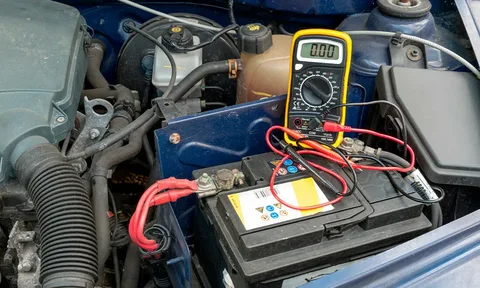
- Regularly check the voltage. An average healthy battery is supposed to read approximately 12.6 volts with a full charge. A voltage lower than 12.4 volts before starting might be a problem.
These tips will ensure that you have a lower chance of experiencing issues with the low-temperature engine start, and can keep your battery available during the coldest months of the year.
Charging in Cold Weather
Cold weather not only influences the rate at which your battery is discharged it also alters the rate at which your battery is charged. The charging rates reduce due to inefficiency in the chemical reactions within the battery. This implies that it takes more time to get your car started.
Assuming that your car does not charge well, you can use a trickle charger. Trickle chargers feed a constant trickle current that is constant, thereby ensuring that the battery is charged to full capacity without overloading it. They suit cars that are not used regularly during winter.
Keeping Batteries Warm and Using Heaters
A warm battery will work much better when it is cold. When your car is parked outside and you can use a battery blanket or any heater to keep the temperature safe. Battery blankets are easy to use; they need nothing more than wrapping them around the battery and connecting them to a domestic outlet. Some vehicles have the heating system installed in the battery compartment.
Another good method to make sure that your battery does not freeze is to park in a heated or insulated garage. Even a couple of degrees of warmth can cause a significant difference in saving the voltage and power output.
Winterizing Vehicle Batteries
It is also prudent to undertake a winterization check on your vehicle battery before the winter season sets in. This will involve checking voltage, checking terminals for corrosion, looking at cables to see whether they are cracking and making sure that your alternator is functioning well.
On-site winter battery service can also be done by professional mobile technicians who would test your battery CCA, charging system and voltage to make sure that your car is prepared to meet the conditions of freezing temperatures.
Conclusion
Cold weather may be harsh on car batteries, yet having minimal preparation and appropriate care, you may prevent unforeseen failures. This will explain why you need to take intelligent preventive measures, such as battery blanketing, checking cold cranking amps, and keeping connections clean, when the ambient temperature is low.
To explore more about vehicle care and maintenance this winter, visit All 4 One Transportation and stay ready for the road no matter how cold it gets.
FAQs
Low temperatures also slow down the chemical reactions within your battery, lowering its power and increasing its difficulty to start your car.
CCA is a measure of the amount of current that your battery is capable of producing in cold weather. The higher the CCA rating, the higher the cold-weather performance
Yes, the electrolyte of a battery that has been discharged can be frozen, particularly in extreme low temperatures. This is by ensuring your battery is charged.
Yes, it is worthwhile to spend a few minutes idling to warm up the battery and engine oil so that your car can run normally.
Park in a garage, use a battery blanket, and ensure that the battery is charged to the fullest point to avoid freezing.