There is nothing as annoying as discovering that your car battery is dead, in addition to the fact that you are already late. It could be a chilly morning and you are about to go somewhere or in the late night and your battery is dead to halt your plans within seconds. It is at that point that mobile roadside assistance comes as an actual savior. As opposed to waiting for a tow, the professional jump-start technicians arrive at your door and assist you to get back on the road safely and on time.
Here in this blog, we shall deconstruct all the information you need to know about how to be safe when dealing with mobile jump services, including proper jumper cable handling, spark prevention techniques, and reverse polarity avoidance. These tips will apply to you, whether you are a driver or technician, so that in case of an emergency boost, you can manage it with great confidence and concern.
Why Proper Handling and Awareness Prevent Costly Damage
When a battery runs out, one is tempted to hurry and re-battery it; however, shortcuts are very dangerous. The battery contains sulfuric acid and hydrogen gas is flammable. Even a single spark for a battery or a flipped connection may lead to battery overheating, explosion, and destruction of your electrical system in the car.
That is why specialists who have been trained in mobile roadside assistance use strict safety measures whenever they are undertaking a jump start. They also understand how to attach and detach cables in the right sequence, check voltages and the use of protective equipment such as safety gloves and goggles.
What to Expect from Mobile Roadside Assistance for Dead Batteries
When your battery dies and you call a mobile roadside assistance service, you will have a trained technician who will arrive with the correct tools and expertise to get your car going safely. The majority of them have portable jump packs, professional jumper cables and voltage testers.
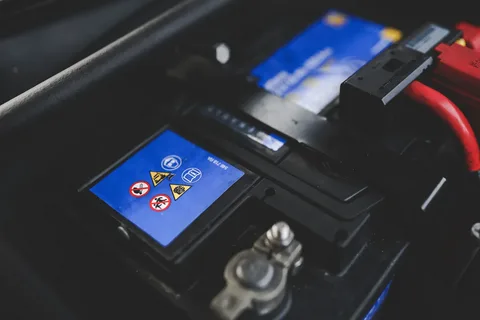
They will start by inspecting your battery by seeing whether your battery has any visible damage such as corrosion, leaks and cracks. In case the battery appears unsafe, they will not even dare jump; they will suggest replacing it. After securing the area, the technician will use a jump start procedure that reduces any chance of sparks or explosion, or reverse polarity.
Battery Safety Tips When Using Mobile Jump Services
Understanding the Risks
Car batteries may appear innocent, yet they are very powerful sources of energy. Jump-starting a car means that you are sending electrical power in one place to another. When cables are not properly connected, the current may flow in a different direction, that is, reverse polarity, and cause immediate damage. Worse still, the hydrogen gas emitted by the battery can start combustion, resulting in a harmful explosion.
Proper Jumper Cable Handling
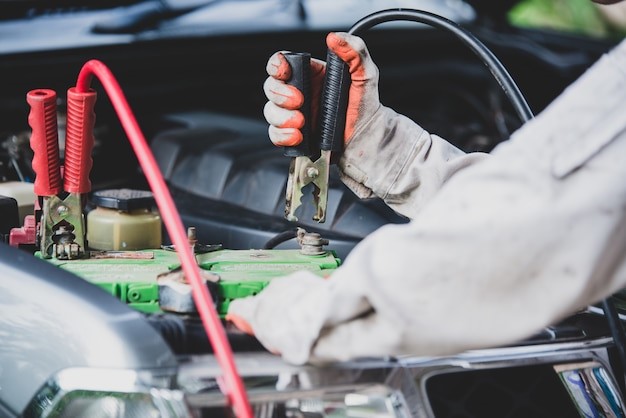
Correct handling of jumper cables is essential whether you are attending to a technician or do it by yourself. Always ground the positive (red) clamp on the positive first, after which the negative (black) clamp on a grounded metal part of the car frame, not on the negative terminal. This helps to avoid sparks around the battery.
Prevent Battery Explosion Risks
An explosion is one of the gravest dangers that may happen during a jump start. This normally occurs when the gas of hydrogen accumulating around the battery explodes as a result of a spark. Always examine cables before attaching them, look at it, in case of corrosion, cracks, or leakage. Never jump-start the battery when it is frozen or swollen.
Using Portable Jump Packs Safely
Jump-starting with the help of modern portable jump packs is much easier and safer than using traditional cables, particularly in remote areas. These small gadgets contain the energy and feed it straight into the battery of your car without involving the use of another vehicle.
To operate one safely, ensure that the jump pack is fully charged and the clamps are clean and tight. Always take instructions in your user manual and most have reverse polarity guard as well as overcurrent guard. Once the car starts, make sure that you disconnect the jump pack and recharge it again.
Spark Prevention Techniques
The occurrence of sparks may be as a result of metal clamps touching a live circuit or breaking contact with the circuit. In the event of minimizing the risk, both cars should be switched off prior to attaching cables (or your jump pack). Clamps should be attached firmly and should not be wiggly after being attached.
Technicians employ methods of preventing sparks, such as attaching the negative cable to a point on the ground instead of the negative terminal of the battery. This is a simple measure that prevents any gases produced by the battery by keeping sparks out.
Disconnecting Cables Safely
When your car is on, you should not hurry to get the cords out. Wait 1 or 2 minutes and the alternator will stabilize the voltage. In cases when it is time to disconnect, first the negative clamp is removed, followed by the positive. Never touch the metal of cables; always grasp them by the insulated grips
Avoiding Reverse Polarity
One of the riskiest errors that individuals commit is connecting jumper cords to the incorrect terminals. The reversed polarity may produce a spark, blow a fuse, or even permanently damage the alternator. Always make sure that the + (positive) and the – (negative) signs are correct before connecting.
Technician Jump Start Protocol
The certified technicians have a standard jump-start procedure roadside to guarantee maximum safety. Their first step is to check the battery, check the voltage, and ground the battery. They also wear gloves and goggles in order to protect themselves and protect the vehicle owner.
Smart Safety Tips for Drivers During a Roadside Jump
Although it is not you who is making the jump, you should be aware of how to be safe while waiting or helping.
- Stay visible: Switch on your hazard lights and either place warning cones behind your car, where possible.
- Keep distance: Other cars should not be in close proximity, and one should not stand between cars.
- Listen to the technician: Do not touch anything without instruction; all instructions need to be obeyed.
- Avoid distractions: Do not use your cell phone or lean over the engine bay when the technician is in the process of working.
- Be patient: Jump-starting only requires a few minutes; hurrying the process is not a good idea.
Common Battery Safety Mistakes to Avoid
Car batteries are a big issue and even minor mistakes can develop into great problems. Avoid the following:
- Skipping inspection: Never jump a battery that is leaking or swollen.
- Using the wrong cables: Make sure that you install cables appropriate to the voltage of your car and that they are in good condition.
- Touching terminals with bare hands: Skin may be burned by battery acid, and may be shocked by electricity.
- Leaving cables connected too long: When starting the car, make sure you unplug as soon as it starts to avoid overcharging it.
- Attempting DIY fixes without knowledge: The mobile roadside service should be called in case of doubt.
Benefits of Using Professional Mobile Jump Services
To call trained professionals with a dead battery has several benefits:
- Safety first: Technicians take the correct safety precautions with batteries to prevent sparks and explosions.
- Time-saving: They come fast and do everything immediately.
- Right equipment: Professionals have portable jump packs and voltage testers.
- Peace of mind: You are sure that the procedure is performed correctly and the vehicle is not at risk of being damaged.
- Preventive advice: Experts can examine your charging system and suggest maintenance suggestions.
You are also saving time with professional assistance, and at the same time, your battery and electric system are in excellent condition.
Conclusion
A dead car battery may hit at the most inappropriate time ever- but that does not mean you should take chances. Accidents and damage to the jumper cables can be prevented by learning how to handle them and prevent sparks, as well as safely disconnecting them.
Wear safety gloves and goggles, make sure that you are checking the connections of the terminals twice, and in case you are not sure, consult trained professionals. Mobile roadside assistance technicians possess the tools, training and safety equipment to ensure that you are back on the road in a quick and safe manner.
To explore more about safe and reliable roadside services, visit All 4 One Transportation, your trusted partner for quick, professional help wherever you are.
FAQs
Also, switch off all electronics, switch on your hazard lights and get your mobile roadside assistance to give you a safe jump start.
The battery can produce hydrogen gas that can be ignited by sparks and can result in a fire or explosion.
Yes, as long as you follow the instructions of the manufacturer carefully and make sure the polarity before connecting it.
They protect against acid burns, sparks, and flying debris from the battery.
Check for leaks, cracks, or corrosion before connecting cables and always follow spark prevention techniques.
Most batteries last 3–5 years. If it struggles to start or shows signs of wear, replace it before it fails.